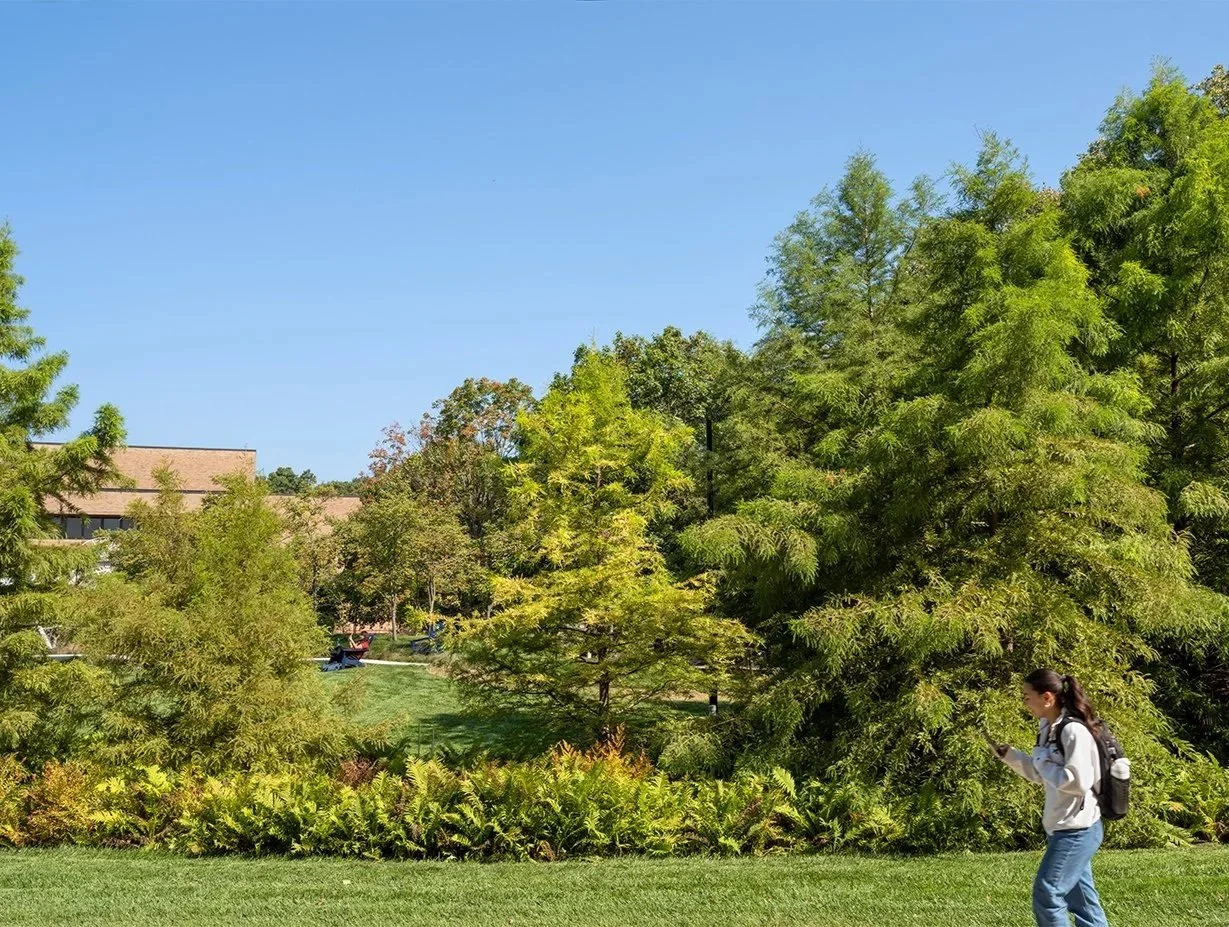
Eda U. Gerstacker Grove
GROWING A CAMPUS FOREST, SEEDING SOCIAL LIFE
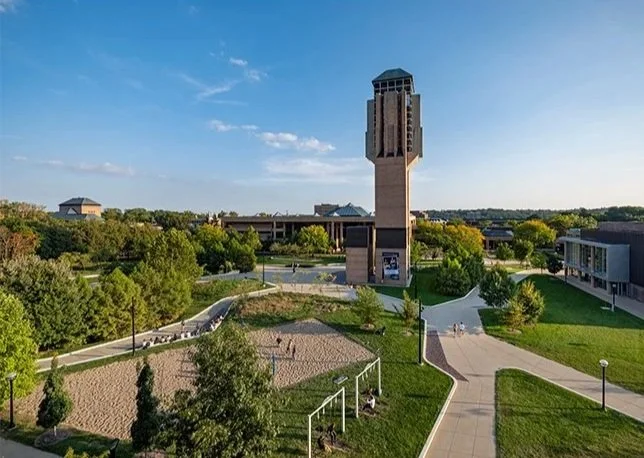
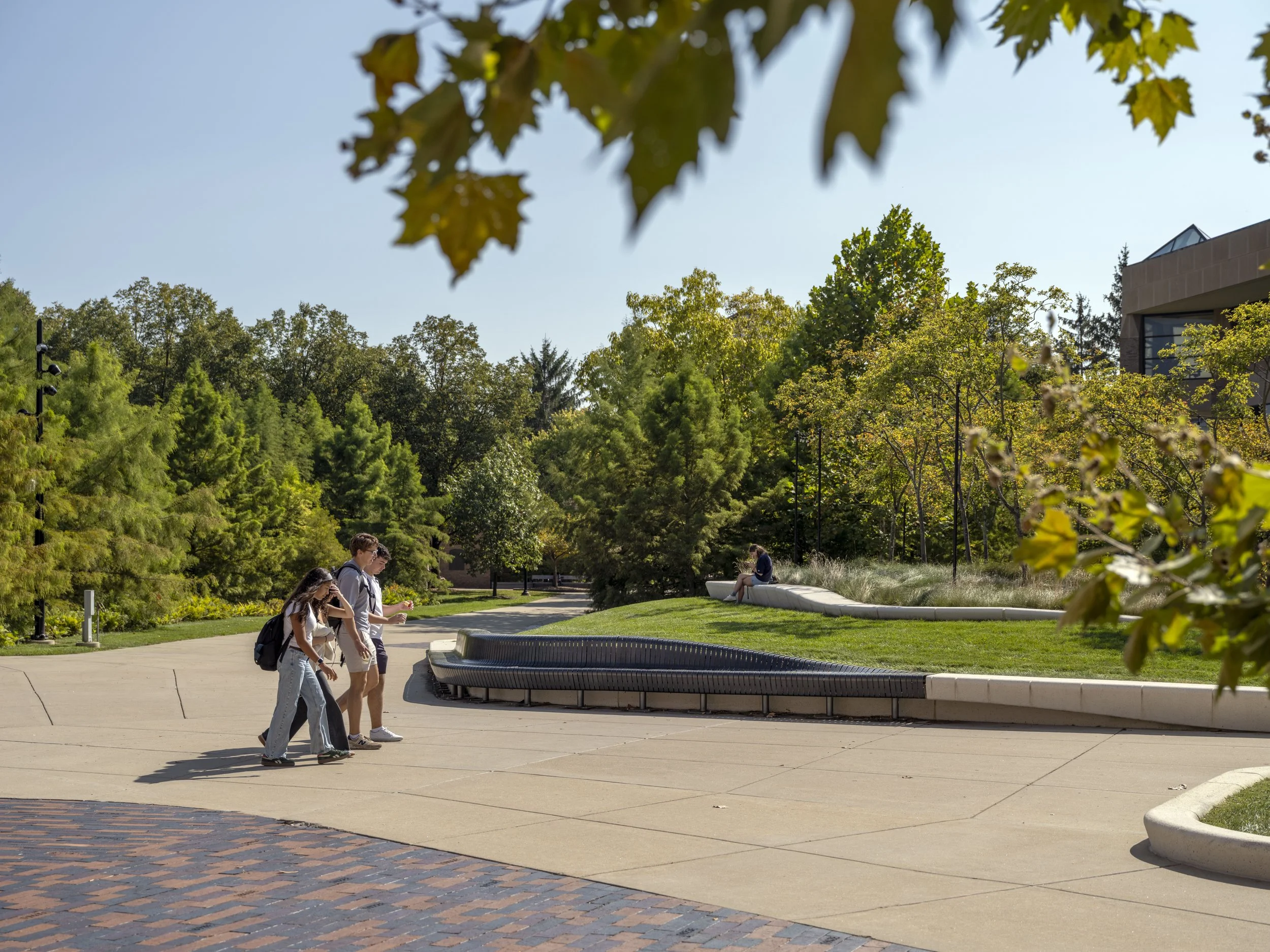
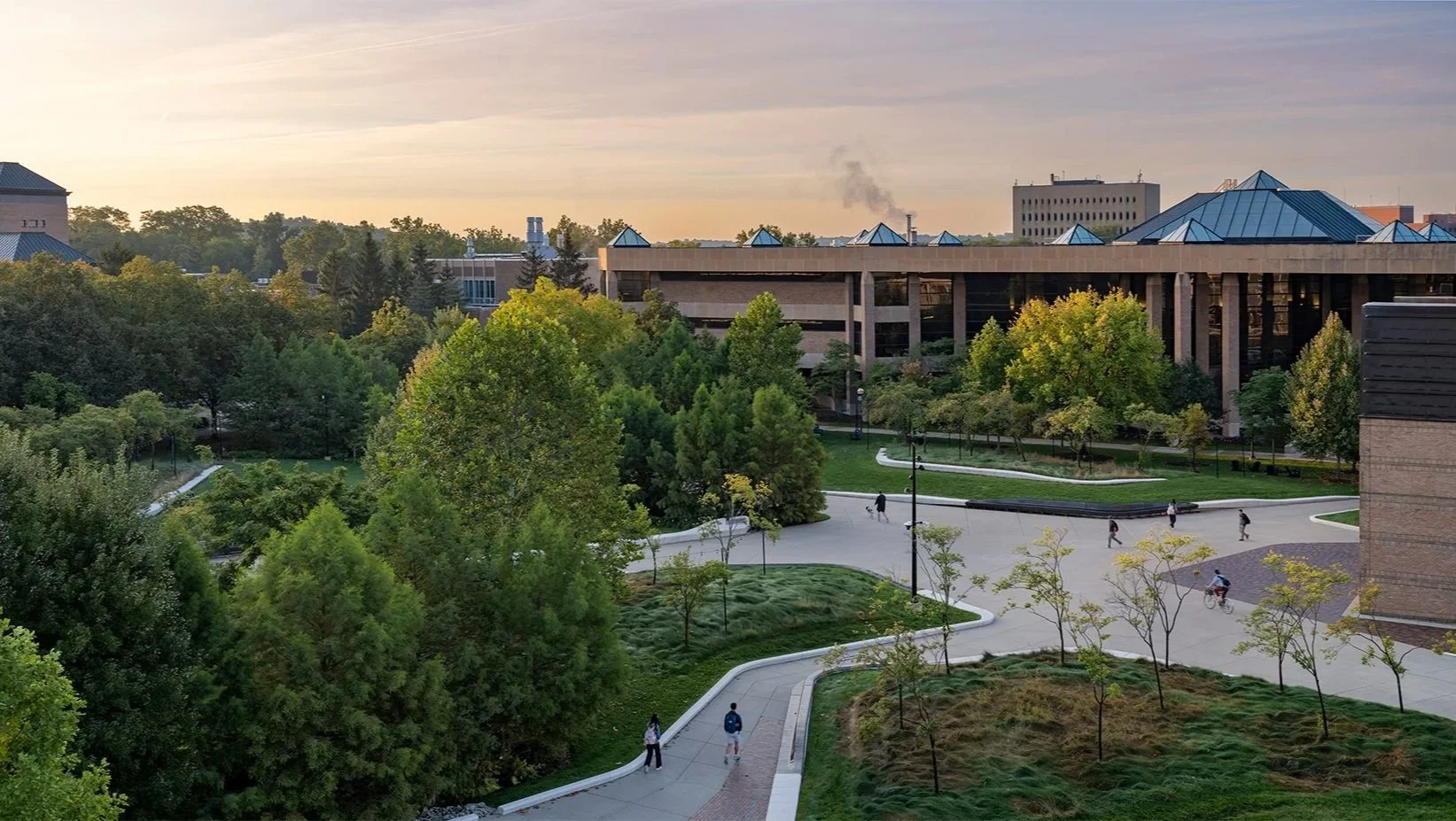
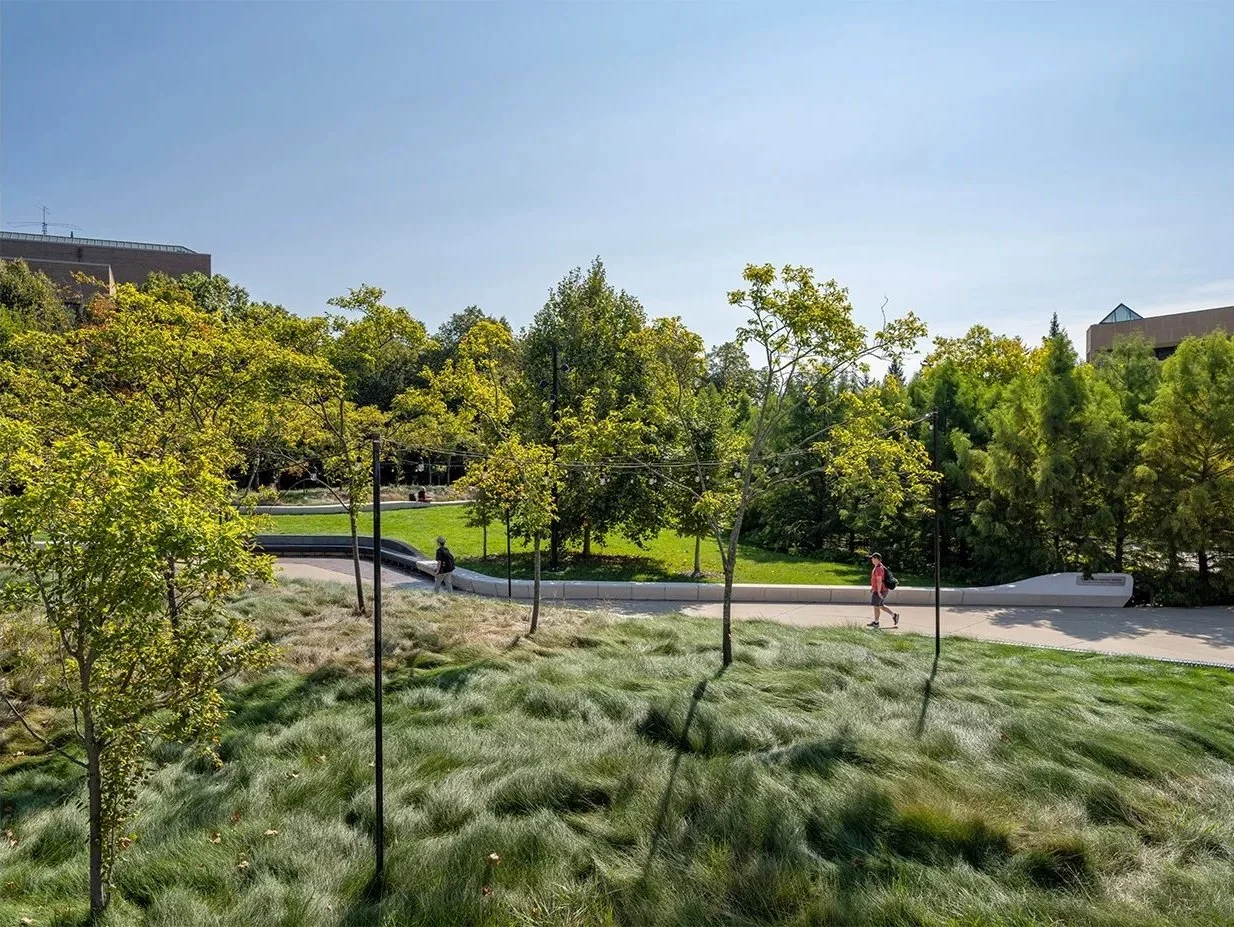
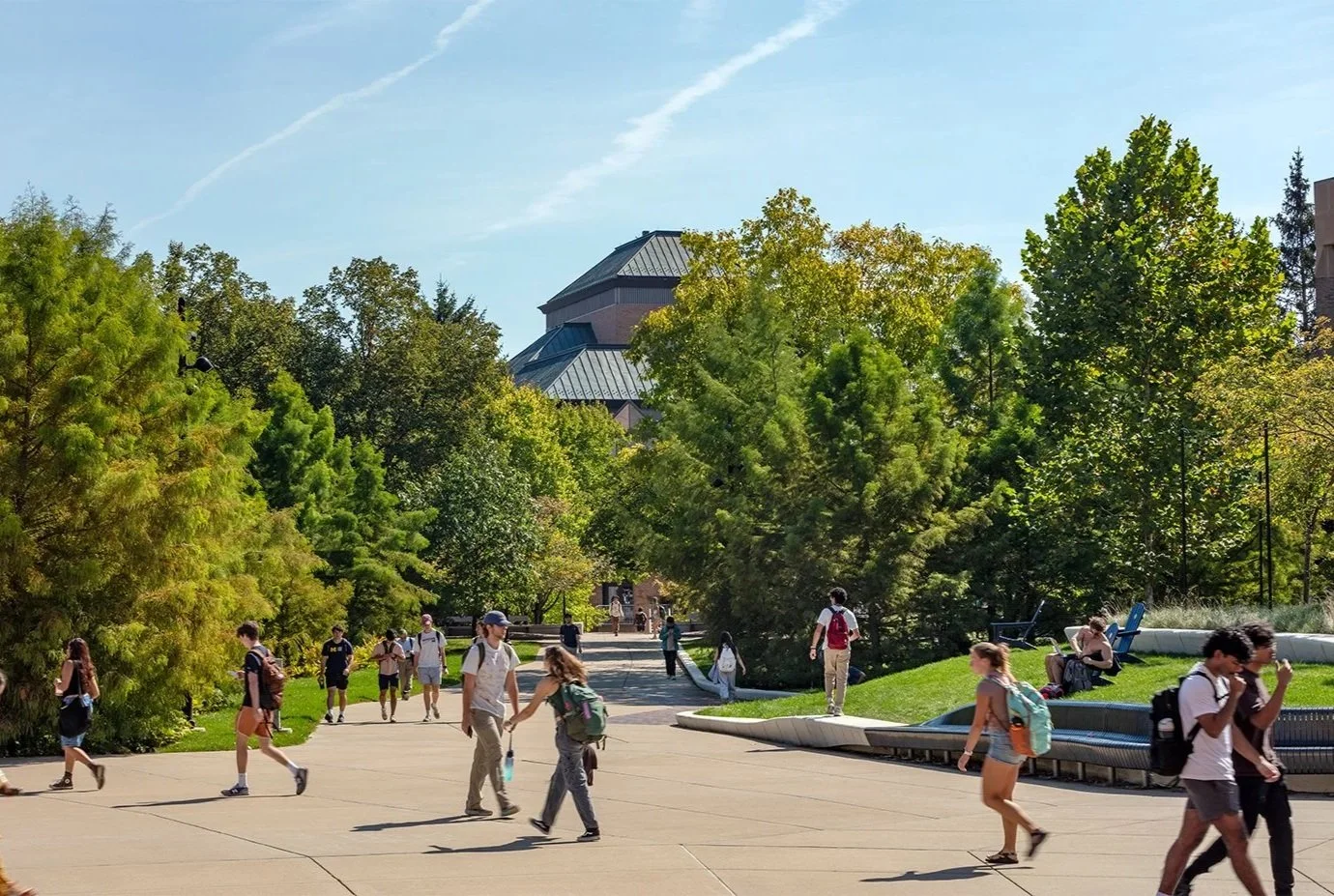
The Eda U. Gerstacker Grove, at the heart of the University of Michigan’s North Campus, home to the Colleges of Engineering, Art, and Architecture, is a lush and lively campus quad that is the heart of student social life. Once barren and underutilized the renovated quad better serves students and faculty with new programming and social spaces that encourage activity, illustrating the university’s forward-looking focus.
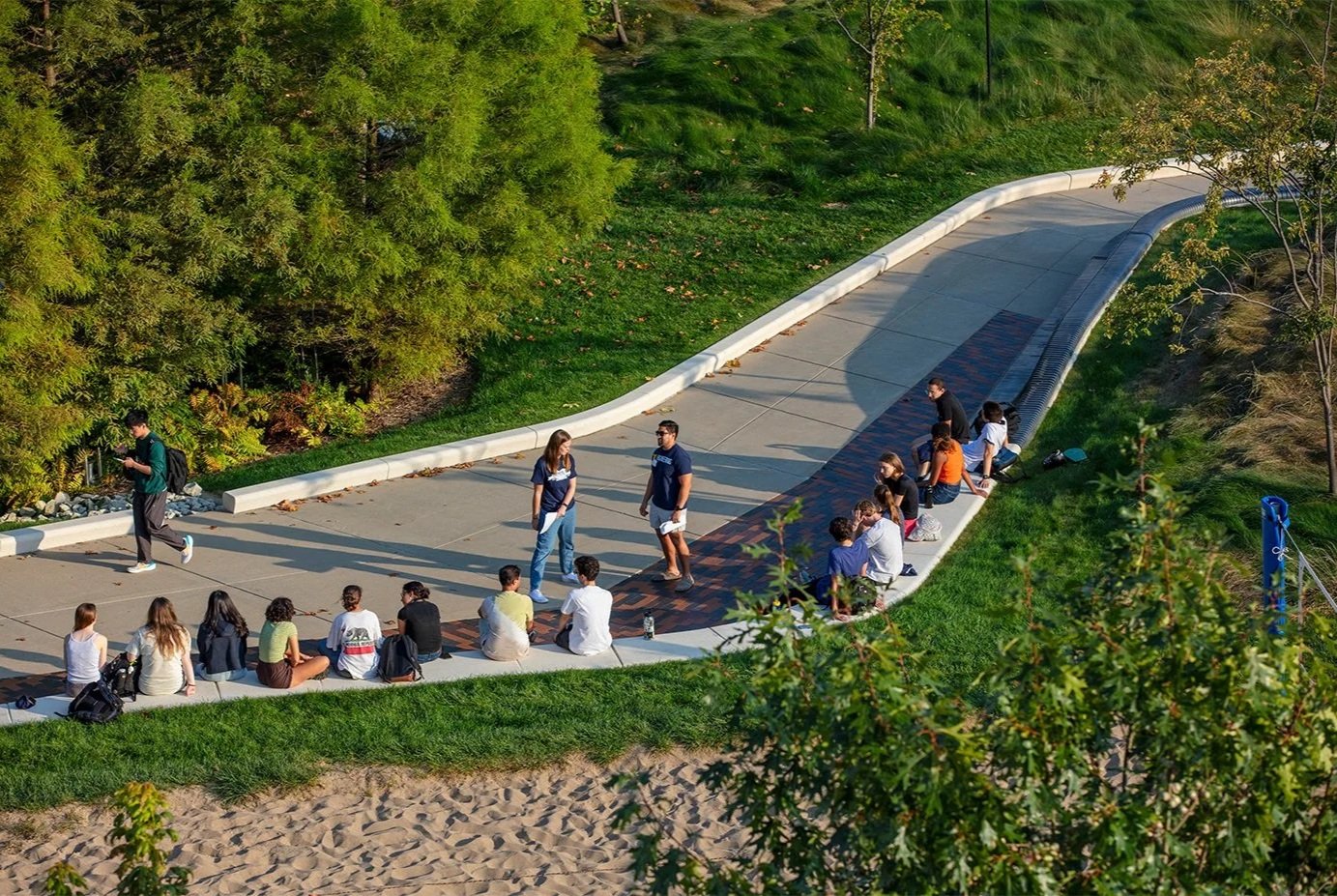
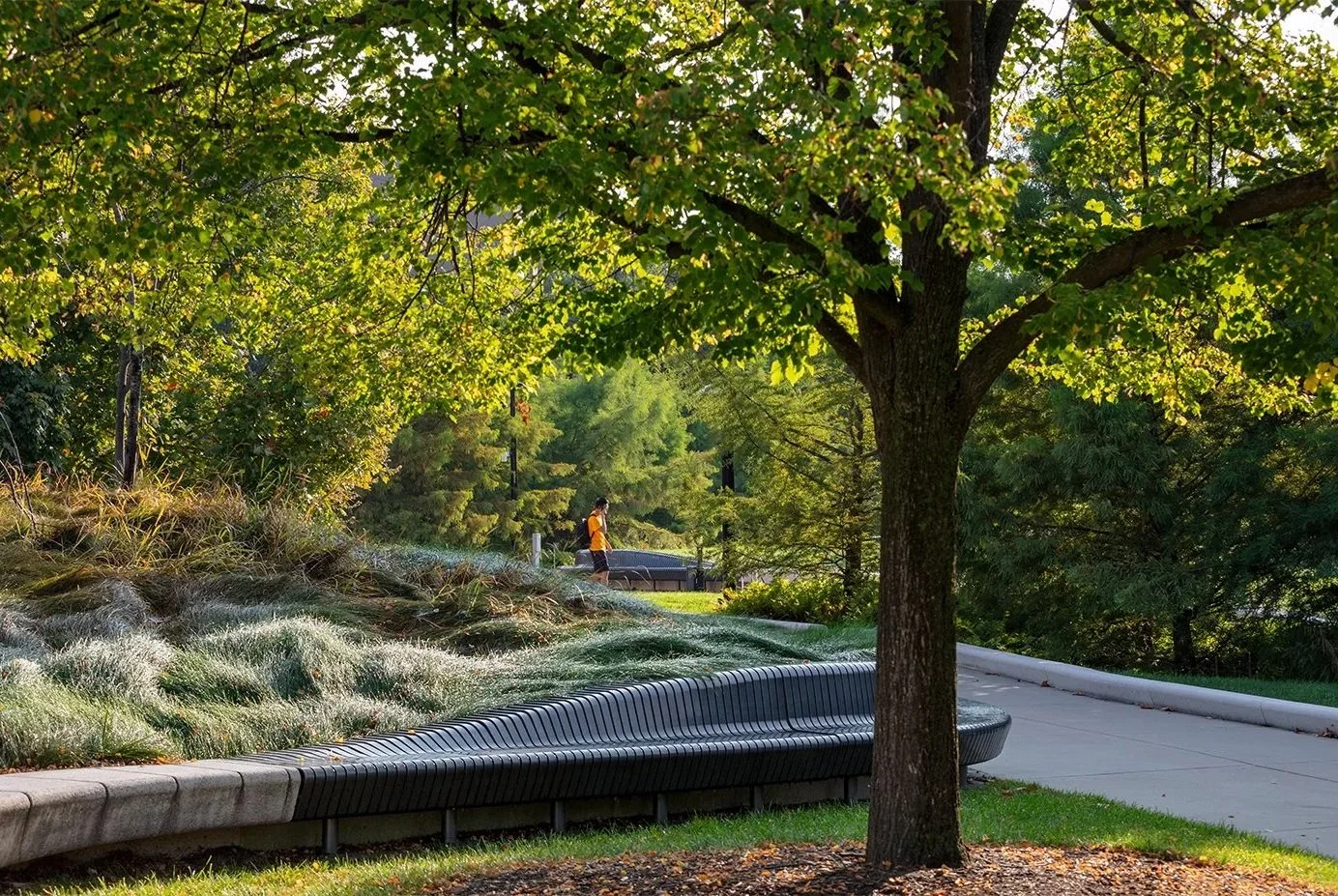
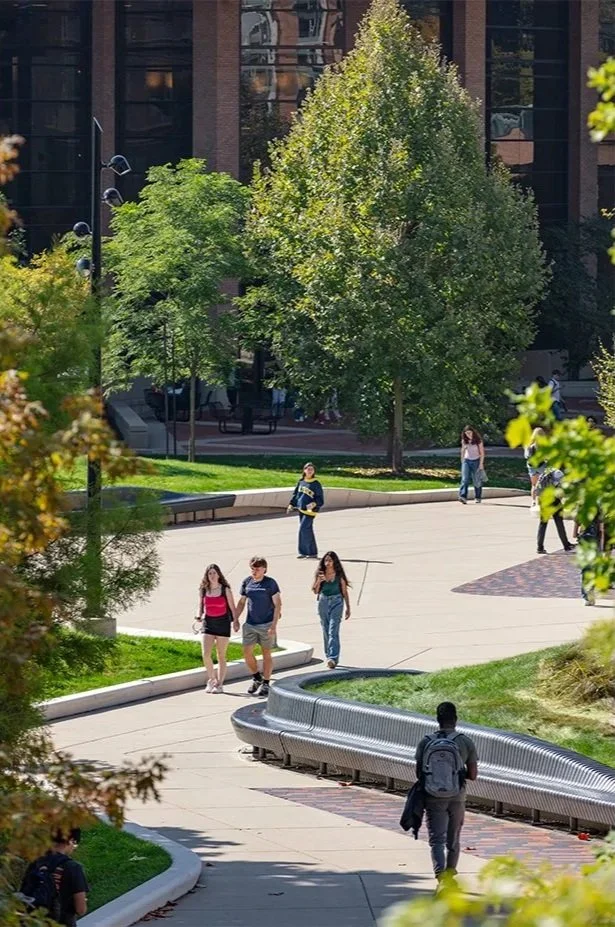
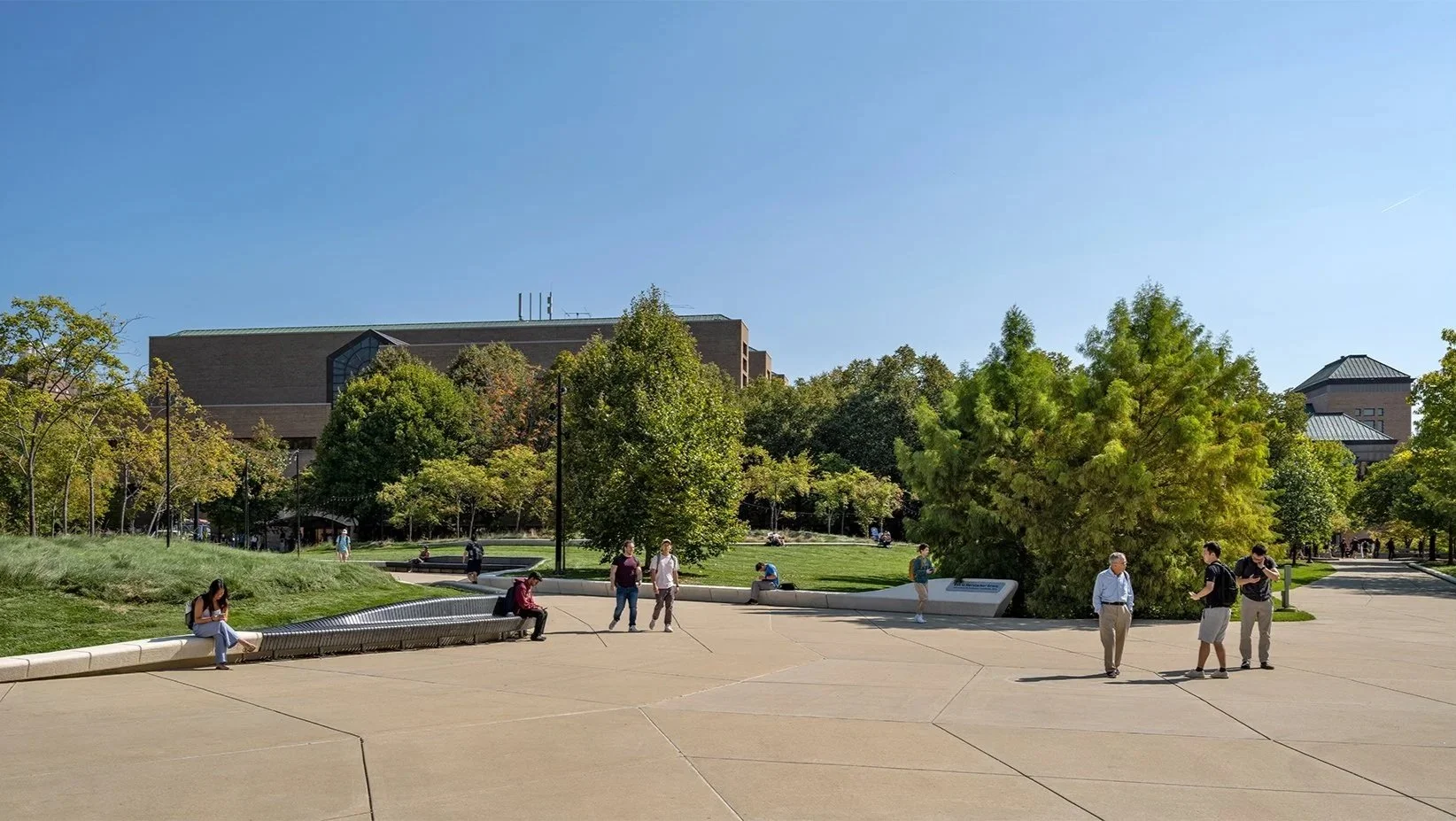
Formally, the quad’s signature, expressive paths purposefully widen and contract at key points to facilitate circulation but also offer natural places for congregating and socializing. The unique plaza paving was actually conceived as a cost-saving measure. With little budget for high-end pavers, the design team utilized pour-in-place concrete and the required expansion joints to create a truly unique look and feel. And, embedded deliberately along the paths and landforms are 978 ft long architectural concrete and metal linear seating elements that retain the adjacent grassy slopes.
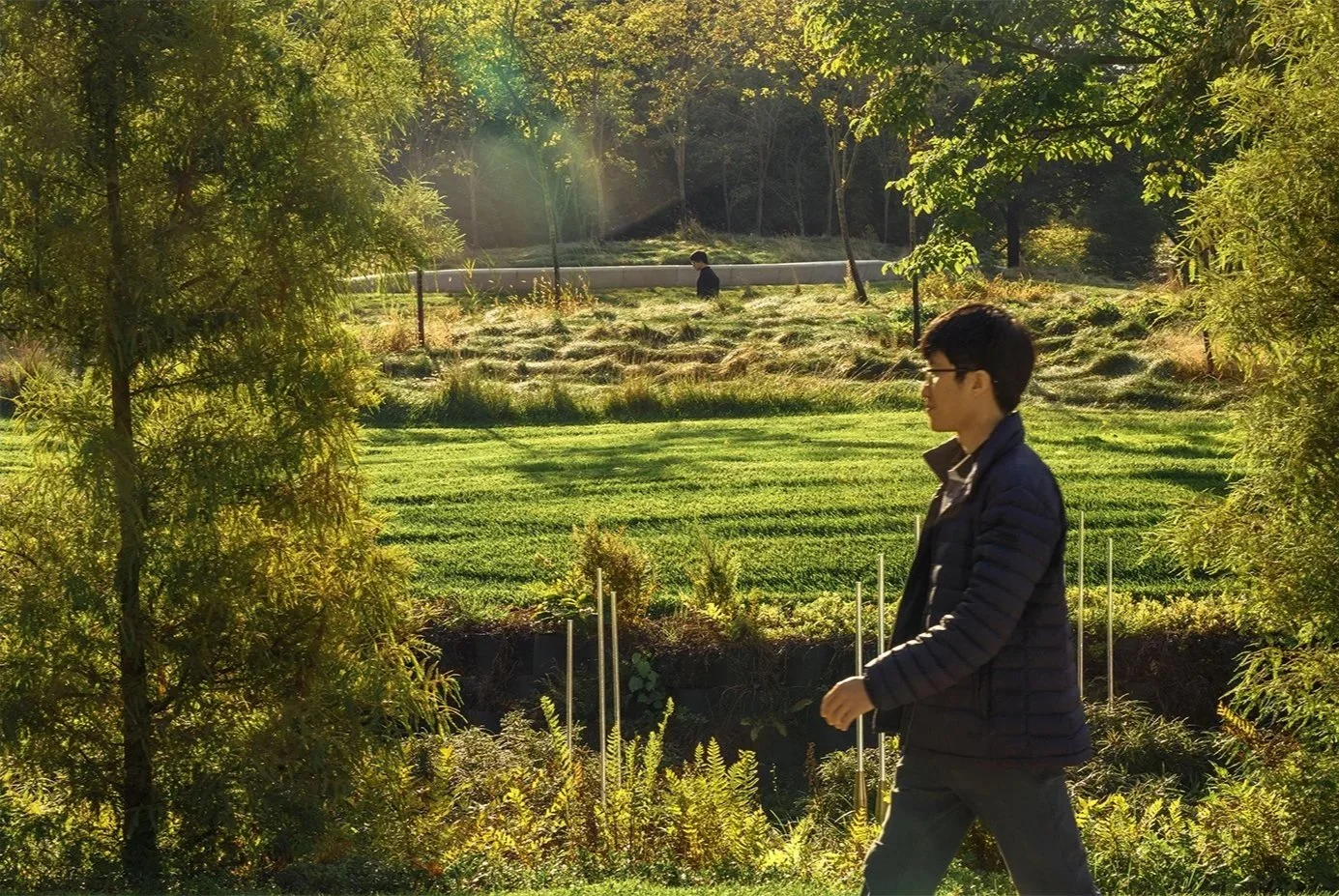
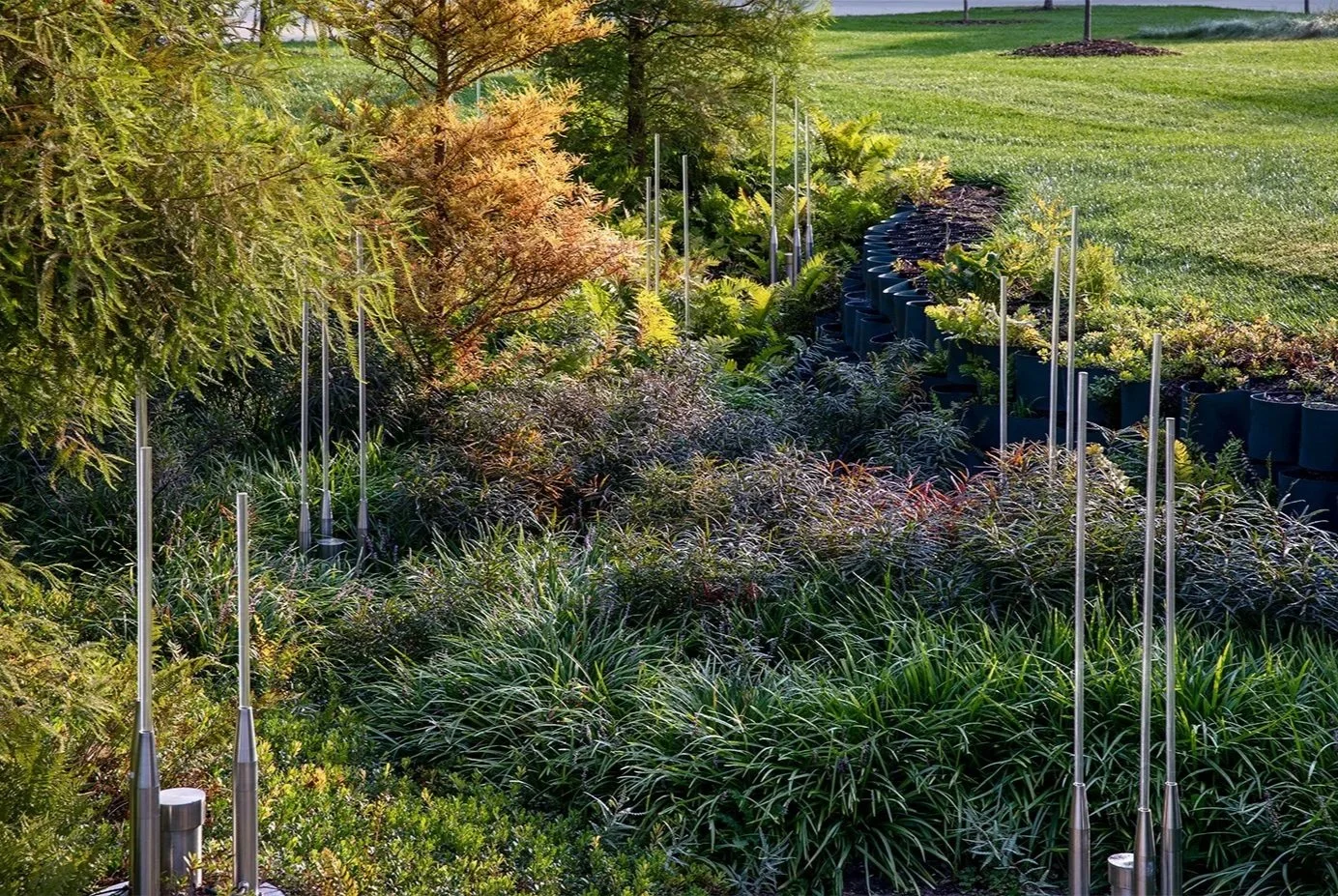
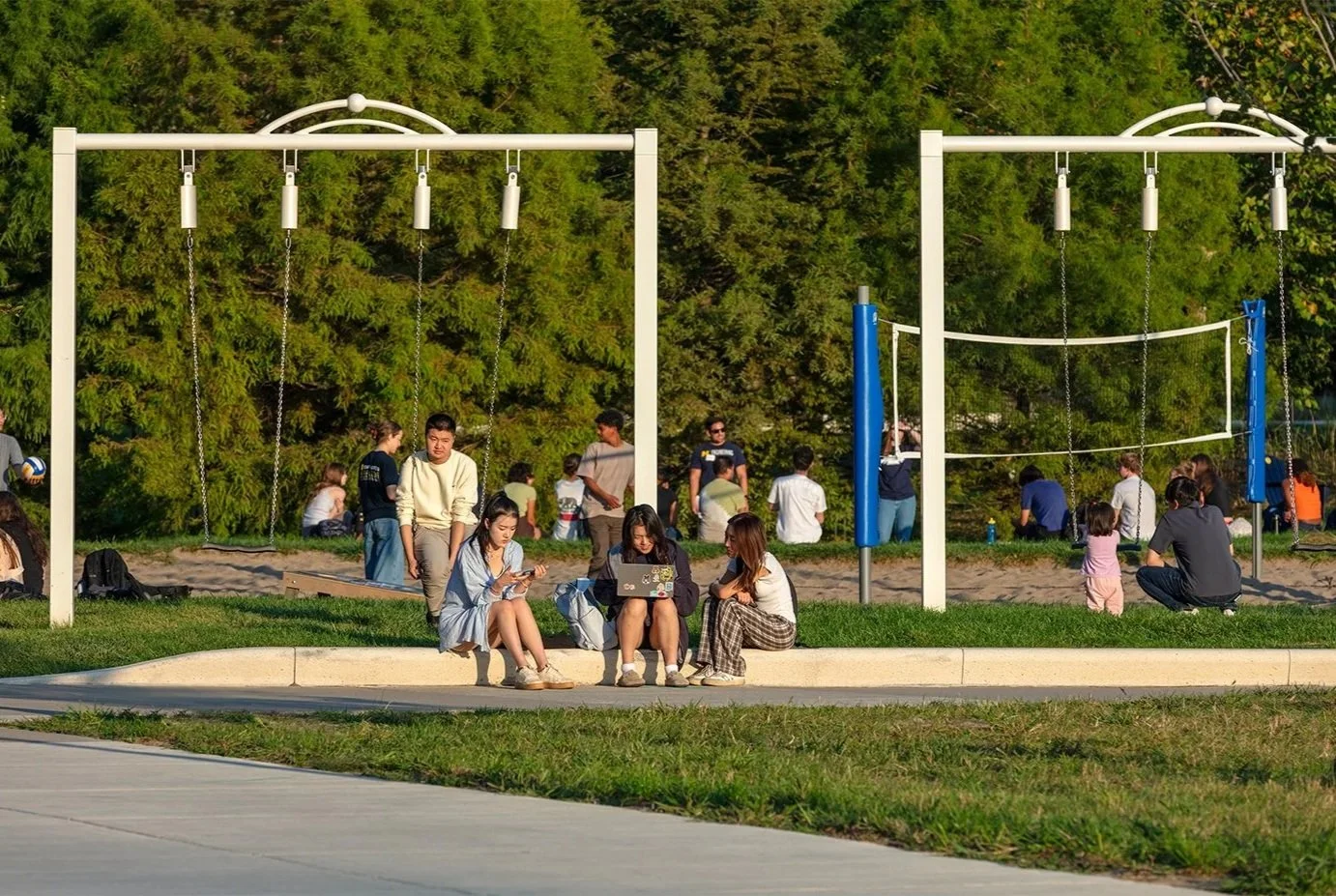
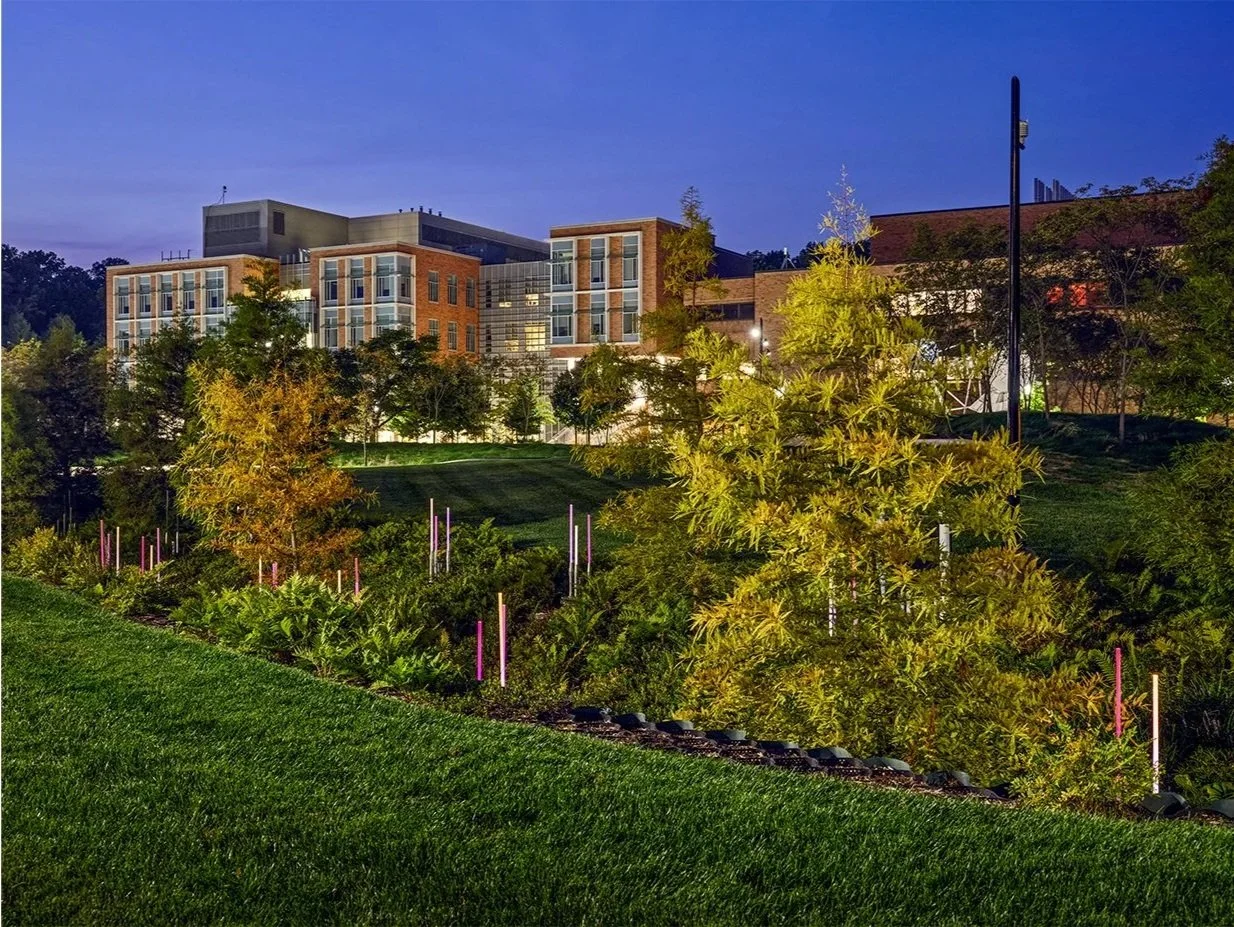
The design can accommodate a wide-range of installations, performances, events, and everyday recreational activities like volleyball, as well as provide quiet spots to simply soak up the sun and enjoy nature. The grove is designed to amplify daily and seasonal change, bringing to life different parts of the quad in warmer and cooler months. Infiltration gardens planted with bald cypress trees and ferns collect rainwater on site, while a weather station reads rainfall, temperature and other data to illuminate over 100 vibrant LED acrylic rods that create a sparkling dance of color and light on the gloomiest of days.
Timeline
2013—2015
Status
Built
Size
4 acres
client
University of Michigan
location
Ann Arbor, MI
TEAM
Stoss Landscape Urbanism
Mannik Smith Group
Illuminart
The sustainable drainage strategy for Gerstacker Grove is centered on facilitating the majority of the water to drain within the site and infiltrate down to the existing water table. The grading of the path and grassy areas directs 65% of the hard surface stormwater runoff, as well as 95% of the total stormwater runoff on site to the infiltration garden area (as compared to its existing condition where 100% of the site drainage was via catch basins and inlets)
As a signature, artistic element, an environmentally responsive lighting feature was installed within each of the five infiltration gardens. The lights resemble reeds and are comprised of a number of transparent plastic rods within each waterproof unit. These ‘reed’ LED lights are spaced out between the planting in the infiltration gardens, and the light level and sequence are controlled by water flow, moisture and temperature sensors within the soil.
Ecologically, the increased variety of amount of native trees and plants increased the biodiversity and introduced new habitats to the site. The planting selection and locations were chosen to reduce the requirement for irrigation as much as possible, with drought tolerant no-mow grass species on the landforms.
The infiltration garden contains trees and plants which can tolerate moist soil conditions, such as, cypress, ferns and mosses. The tree and plant species were also selected for their tolerance to the build up of salt from the winter de-icing regime. The existing trees have been retained as much as possible. Together, they make the North Campus a signature wooded environment and majestic grove of trees that increase shade canopy.